Is Vinyl Flooring a Good Option for Nashville Kitchen Remodels?
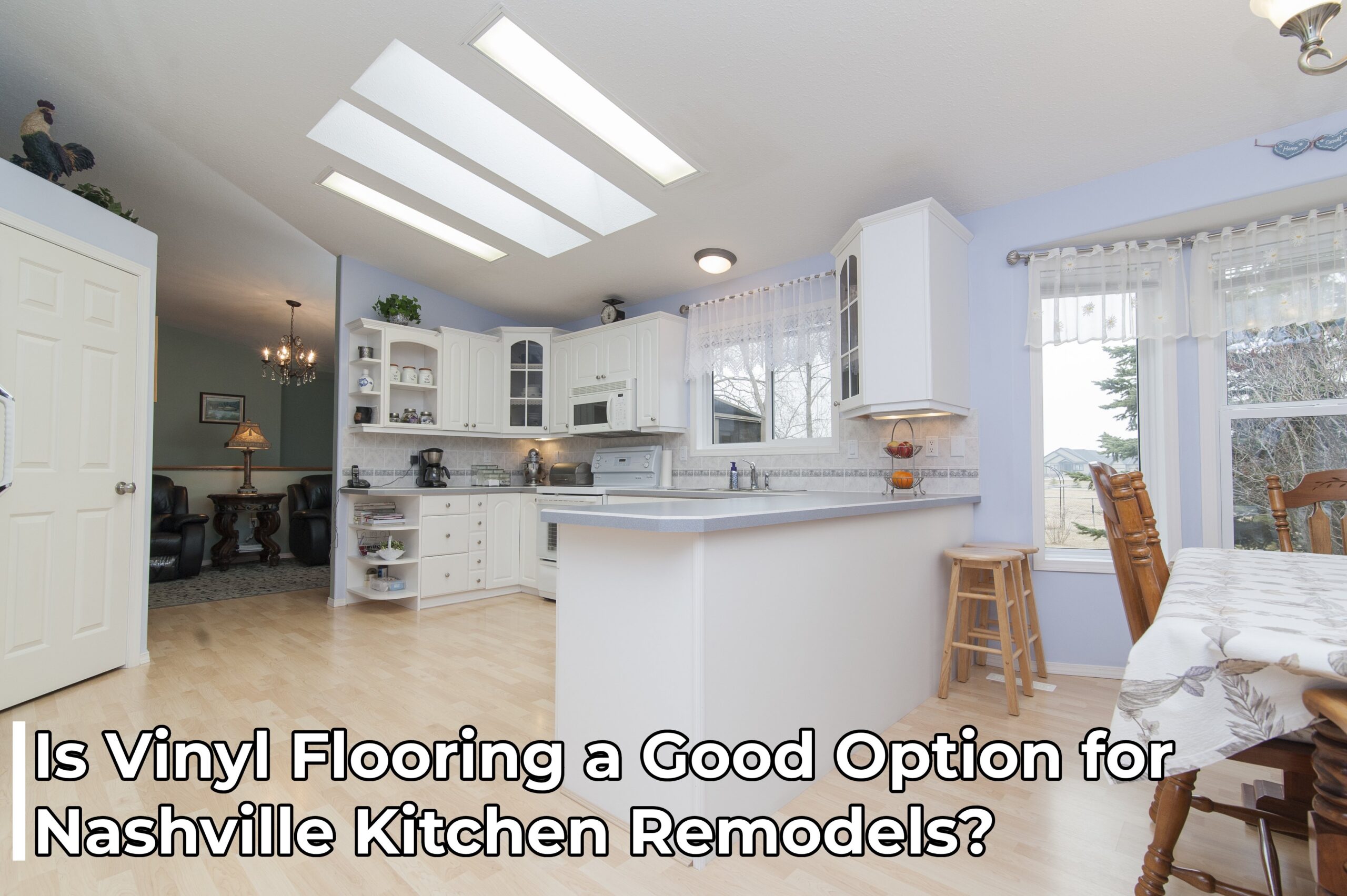
Yes, and for most Nashville kitchens, it ranks among the stronger flooring options on the market. Luxury vinyl plank holds up well to the daily demands of a working kitchen: it’s waterproof, scratch-resistant, easier on your feet than tile, and can convincingly replicate the look of hardwood at a fraction of the cost. Whether you’re deep into a full kitchen home remodeling in Nashville, TN or simply swapping out floors that have seen better days, LVP deserves a serious look.
That said, it’s not the right fit for every kitchen. The best choice still comes down to your home, your household, and the full scope of your remodel. A skilled flooring team can walk you through what LVP actually delivers and whether it makes sense for your specific space.
What Makes LVP Worth Considering for a Nashville Kitchen
Luxury vinyl plank is a synthetic flooring product engineered to replicate the appearance of hardwood. It installs as individual interlocking planks, sits at a relatively thin profile, and handles moisture far better than real wood ever will. In a kitchen, that waterproof quality matters more than most people realize going in.
Water creeps under refrigerators, pools around dishwashers, and splashes across the floor during everyday cooking. Real hardwood can warp and buckle under that kind of repeated exposure. LVP doesn’t.
Visually, today’s LVP products are much closer to hardwood than they were even five years ago. You’ll find realistic options mimicking white oak, walnut, and natural pine, which suits the design direction a lot of Nashville homeowners are going. In Germantown and 12 South, where older properties are being renovated with an eye toward character over uniformity, LVP has become a go-to because it delivers that warm aesthetic without the structural prep that real hardwood sometimes demands on a subfloor that’s had decades to shift and settle.
We offer flooring installation for LVP, hardwood, carpet, ceramic and porcelain tile, stone, and travertine. The comparison between options is part of every initial consultation, not an afterthought once you’ve already committed to something.
How LVP Holds Up Day to Day
The wear layer on a quality LVP product is what separates a floor that looks great for years from one that starts showing its age within a couple of seasons. Thicker wear layers resist scratching, scuffing, and staining better. In a kitchen with kids, pets, or high foot traffic, which describes most Nashville households across all price ranges, that wear layer makes a real practical difference.
Spills, including oil and acidic liquids like vinegar and tomato sauce, clean up without leaving permanent stains on a properly installed LVP floor. It’s also more forgiving than most people expect if something gets dropped, though a heavy cast iron pan falling from enough height can leave a mark on any flooring material.
One thing worth being upfront about: not all LVP is created equal. Cheap products exist, and they won’t hold up the way a quality product will. We walk every client through the available options before anything gets ordered. The goal is a floor that performs for the long term, not just one that photographs well during a listing.
What to Think Through Before You Decide
Subfloor condition matters more than most homeowners expect going into a flooring project. LVP is forgiving over slightly uneven surfaces, which is useful in older Nashville construction. But significant subfloor damage, such as rot or water damage from a dishwasher leak that went unaddressed for too long, has to be fixed before any new flooring goes down. We assess the subfloor during every project walkthrough and handle repairs when they’re needed.
Julie Merkle ran into that exact situation when we worked on her home:
“I used BNG Remodel to put down new carpets and luxury vinyl flooring in my home, repair the subfloor below a dishwasher that leaked, and paint the walls, trim, and ceilings throughout. Brittney’s communication is unsurpassed.” – Julie Merkle, Google, September 2023
If you’re also renovating the kitchen layout at the same time, sequencing matters. Flooring goes in after plumbing changes, cabinet installation, and any structural work is complete. We coordinate the full project timeline so nothing gets installed out of order and then has to come back out.
It’s also worth thinking about what’s adjacent to the kitchen. If LVP will run from the kitchen into a hallway or open living area, planning the flooring across the whole main floor from the start prevents the kind of obvious seam between mismatched materials that can undercut an otherwise well-done renovation.
How LVP Compares to Tile and Hardwood in a Kitchen Setting
Tile is the main competitor in a kitchen context, and it’s a legitimate option. Porcelain and ceramic tile are fully waterproof, extremely durable, and can hold up for decades with minimal upkeep. What they don’t offer is warmth underfoot. Tile runs cold in the morning, and it’s harder on joints during extended time at the stove.
For homeowners who cook a lot, that physical reality matters. Hardwood in a kitchen is a more complicated conversation. It’s possible, and some homeowners in Belle Meade and Franklin love the look of hardwood running through an open-plan kitchen and living area. The tradeoff is that real wood and kitchen moisture have a difficult long-term relationship, and a significant water event (a leaking refrigerator, a dishwasher overflow) can cause real damage that’s expensive to address.
LVP sits in a practical middle ground: the visual warmth of hardwood, waterproof performance comparable to tile, and a price point that typically falls below both natural stone and premium hardwood. For a kitchen remodel in Nashville, that combination lands well for most households. Flooring installation in Nashville generally runs $2,000 to $8,000 per room depending on material, square footage, and subfloor conditions, and LVP falls in the accessible mid-range of that spectrum.
What the Installation Process Looks Like
We start with a walkthrough of your kitchen to assess the subfloor, get accurate measurements, and go through the product options that fit your design goals and budget. Material selection happens before any work begins. There are no surprises on day one about what was assumed versus what was agreed.
Brittney Reader, our founder, personally manages every flooring project. She coordinates the crew schedule, stays reachable by phone throughout the job including evenings and weekends, and sends daily progress updates so clients always know where things stand without having to chase anyone down.
Dylan McBrayer described his experience after we installed new flooring in his home:
“We are very happy with our new flooring that just got installed! BNG Remodel was so professional and efficient with this project! I would personally recommend this company to any of my family and friends!” – Dylan McBrayer, Google, April 2024
Most single-room LVP installations wrap up in one to two days. When subfloor repair is part of the scope, that adds time, and we factor it honestly into the project timeline before work starts.
Frequently Asked Questions About Vinyl Flooring in Nashville
These are the questions we hear most often from Nashville homeowners considering LVP for a kitchen remodel.
Is LVP flooring truly waterproof? Yes. Luxury vinyl plank is fully waterproof, which is why it works well in kitchens, bathrooms, and laundry rooms. Unlike hardwood, it won’t buckle, warp, or swell from moisture contact.
Can LVP be installed over existing flooring? In some cases, yes, provided the existing surface is flat, stable, and in good condition. We assess the current floor and subfloor before making that call. If the existing floor needs to come out, we handle removal as part of the project.
How long does LVP flooring typically last? A quality product with a proper wear layer lasts 15 to 25 years under normal household use. Both the product grade and the quality of the installation affect how long it holds up.
Does LVP work well in older Nashville homes? It’s one of its practical advantages in older construction. LVP handles slightly uneven subfloors better than hardwood does, which matters in homes built before 1980 across East Nashville, Bellevue, and Hendersonville. Significant subfloor damage still needs to be repaired first, but minor irregularities aren’t usually a dealbreaker.
What other flooring types do you install in Nashville kitchens? We install hardwood, LVP, ceramic tile, porcelain tile, stone tile, travertine, and carpet. We can also work with flooring materials the homeowner has already purchased. If you’re weighing LVP against tile flooring or hardwood for your kitchen, that conversation happens at the initial consultation.
Contact Us
We’re here to help bring your home remodeling vision to life. Whether you’re ready to start a project or just exploring ideas, reaching out is easy:
Call us: (615) 525-8464.
Email: services@bngremodel.com
Business hours: Monday – Sunday 7:00 AM – 10:00 PM
Office Location: 413 Welshwood Drive, Suite 315, Nashville, TN 37211.
We’re proud to be licensed, bonded, and insured, and we’re committed to delivering quality craftsmanship with a personal touch. Fill out our online contact form, and we’ll get back to you promptly.
Related Topics:
- Why Choose Tile Flooring for Your Nashville Home Remodel?
- The Benefits of Sustainable Flooring Options for Nashville Home Remodels
The post Is Vinyl Flooring a Good Option for Nashville Kitchen Remodels? appeared first on BNG Home.
from BNG Home https://bngremodel.com/is-vinyl-flooring-a-good-option-for-kitchen/
via BNG Remodel


Comments
Post a Comment